
Library 2.0 is the extension of Web 2.0 concepts to libraries. It applies Web 2.0 principles to library services.
Michael Casey coined the term library 2.0 in 2006 on his blog, Library Crunch. It is a proposed concept for library services that facilitate user contributions and other Web 2.0 features, including online services such as an OPAC system.
Library 2.0 refers to all types of initiatives aimed at promoting collaboration in library services. The proponents of this idea claimed that using this can make the services better.
Resources About Using Library 2.0 Tools in Libraries
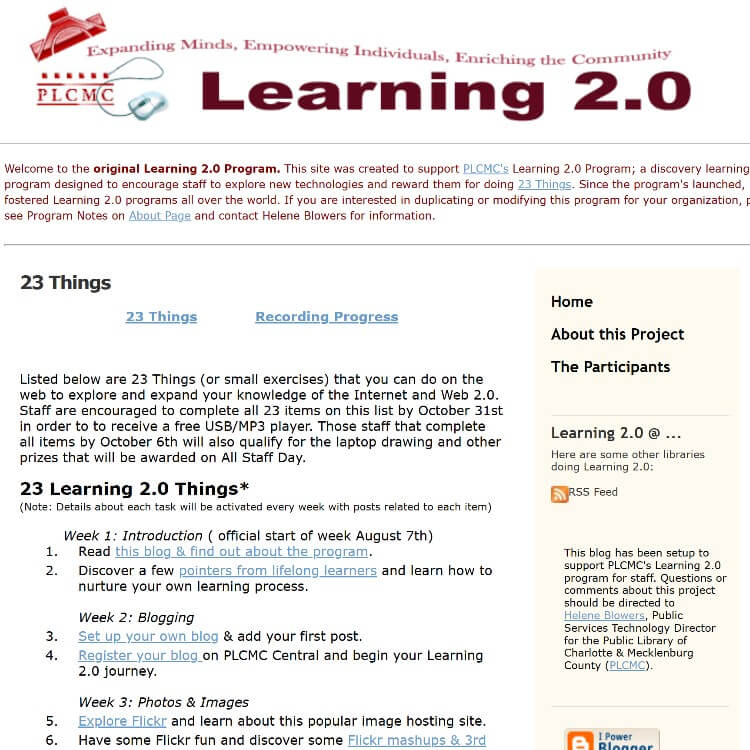
It is one of the earliest efforts towards the implementation of modern tools into library services. This program was created for the Public Library of Charlotte & Mecklenburg County (North Carolina). This website was created for the library’s Learning 2.0 program that aimed to encourage the staff to explore the new technologies and reward them for doing 23 things. Rewards were announced for those completing the tasks.
Resources for Librarians about Online Social Networking
Here are tools and resources from ALA’s Young Adult Library Services Association for libraries to educate teens and young adults about social networking and how to use it safely.
Online Social Network Tools: An introduction
This is a presentation that teaches how blogs and wikis are helping citizens of the web interact socially and build communities. It is presented by Paulita Aguilar, Holly Phillips, and Twila Firmature. It includes examples of current uses by non-librarians and librarians. It was presented at the New Mexico Library Association Meeting in Farmington, New Mexico, on April 21, 2026. You can find and download the PDF of this presentation.
OPAC (Online Public Access Catalog)
OPAC provides the library collection to its users. Users can search and browse the library catalogue online. It may be an extension of the Integrated Library Management System or independent software.